Across the Assembly, there was a strong emphasis on monitoring, particularly the role of hunters and local actors in observing changes in wildlife populations and responding to disease risks. In one of the breakout discussions, it was acknowledged that while these observations are already happening on the ground, there is still a gap in more structured, cross-border systems to translate them into shared, actionable knowledge. From my perspective, this stood out as an important point. It reflects a broader shift toward recognising that wildlife health, land use, and livelihoods are interconnected, even if the systems managing them are not always fully aligned.
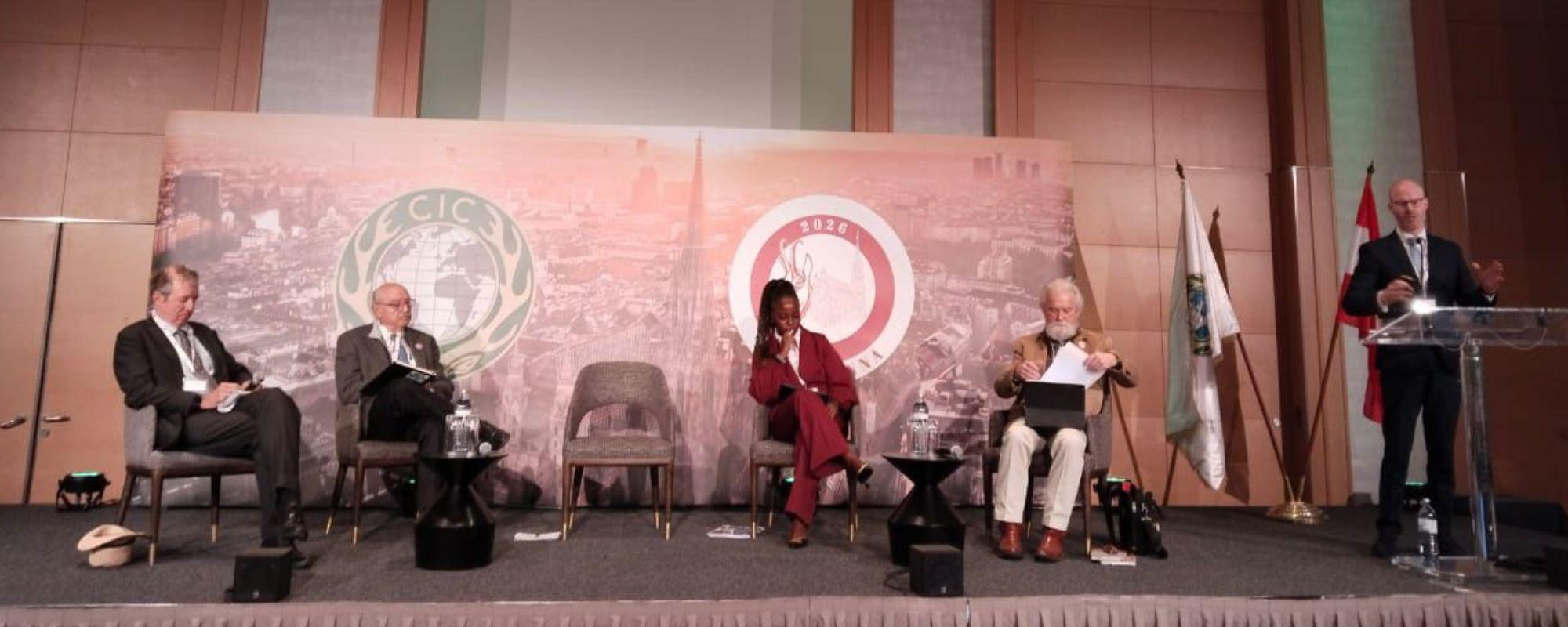
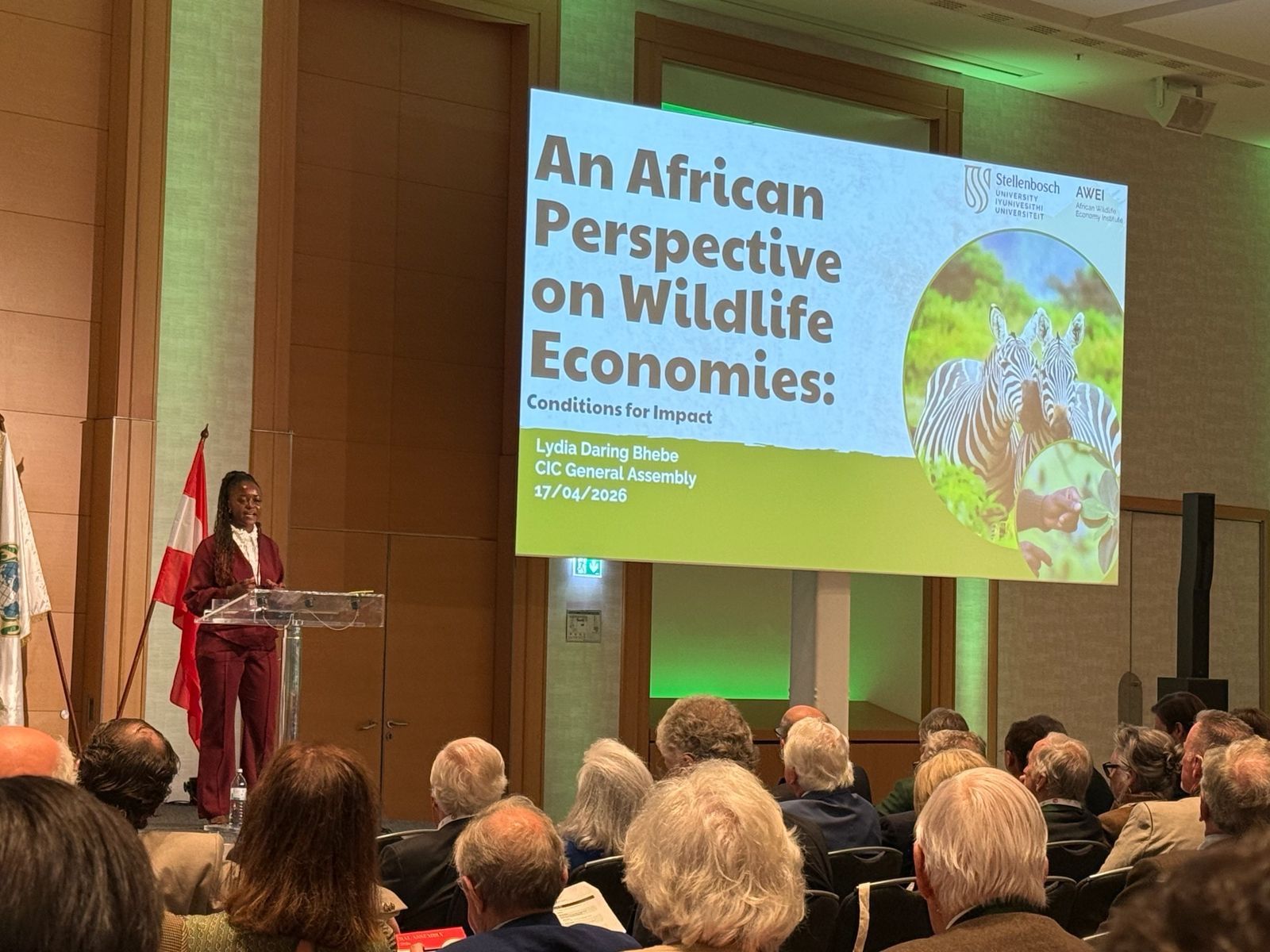
Across the African region, there are already strong frameworks and initiatives shaping how wildlife economies are understood and developed, from the SADC Wildlife-Based Economy Strategy to national-level reforms and investments, including biodiversity financing initiatives such as the GEF-7 programme in South Africa. In my contribution, I drew on these examples to show that the building blocks for sustainable use are already in place. What becomes more complex is how these different efforts connect in practice. Being in a space like CIC GA also made it possible to see how similar conversations are unfolding elsewhere. In discussions with colleagues working on community-based conservation initiatives, including Panda Mbegu (supporting community conservation in Africa), it became clear that while contexts differ, many underlying challenges are shared, particularly in linking conservation efforts to meaningful local participation and long-term economic opportunity. The question, then, is not simply what needs to be done, but how these efforts – across regions, sectors, and scales – can be better connected.
Moving forward, the opportunity is not necessarily to create entirely new systems, but to better connect what already exists, across actors, knowledge systems, and the full value chain. This includes strengthening coordination between wildlife economy actors, supporting more meaningful forms of participation, and enabling local ownership and enterprise development. It also requires recognising that many of the challenges observed are not only technical, but structural, reflecting long-standing separations between policy and practice, institutions and livelihoods, and, in some cases, people and the landscapes they depend on.
At a broader level, what stayed with me was the level of coordination and cohesion demonstrated within the CIC platform. Despite representing diverse countries and contexts, there was a clear ability to engage with shared challenges and reflect collectively on what is and is not working. This is not about comparing regions, but it does highlight what becomes possible when systems are able to align more effectively. It is, in many ways, an aspiration, something I hope to see continue to develop more strongly across African regional platforms as well.
In this regard, CIC holds a unique position, where its strength lies in its global network and its ability to bring together actors across policy, science, and practice. There is an opportunity here to move beyond exchange towards more deliberate coordination, supporting the ways knowledge, governance approaches, and lived realities connect across regions. If leveraged effectively, platforms like CIC could play a stronger role not only in advancing sustainable use narratives, but in shaping how these systems function in practice.
At the same time, these conversations must remain grounded in a critical reality: Sustainable use cannot be reduced to economic value alone. It requires systems that are ecologically responsible, socially inclusive, and governed in ways that prevent overexploitation, rather than respond to it after the fact. This is where the balance lies, not in choosing between conservation and use, but in ensuring that the systems enabling that use are structured to sustain both. This sense of collective purpose was perhaps most visible during the March for Conservation, a quiet but powerful moment where all participants walked together through Vienna, carrying messages such as “Hunters protect biodiversity” and “Conservation for nature.” For me, what stood out was not just the message, but the diversity of those present – young and old, from different countries and backgrounds, moving together with a shared sense of purpose.
Being at the CIC General Assembly reminded me that spaces like this matter. Not because they resolve all the challenges, but because they create room to reflect, to question, and to better understand how different pieces of the system connect.
And perhaps that is where the real work begins.