



















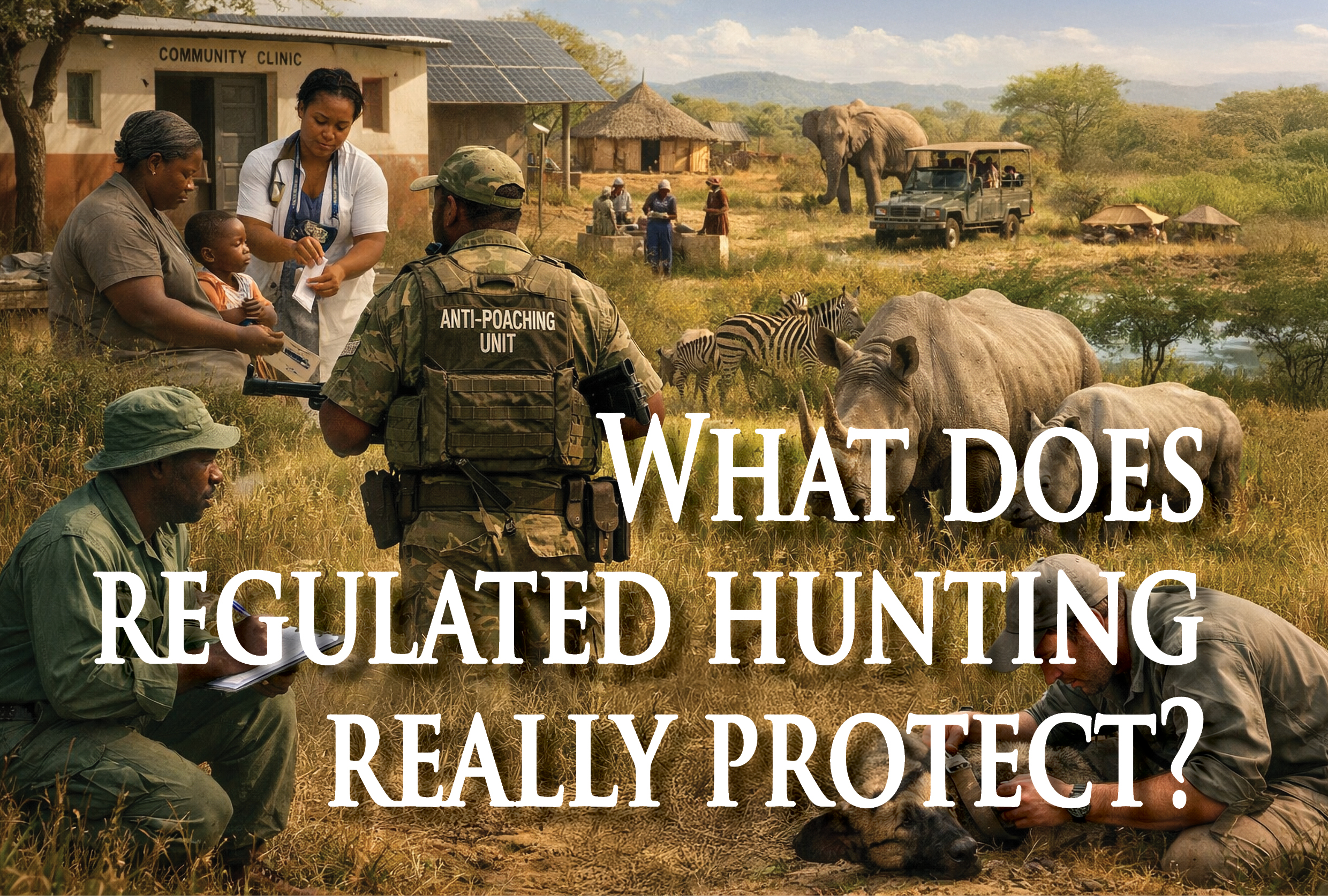
What Does Regulated Hunting Really Protect?

In a world dominated by quick takes and viral headlines, hunting is often reduced to a single image: a trophy, a rifle, a controversy. But conservation is never captured in a snapshot. Behind the noise lies a far more complex – and often misunderstood – truth. In many regions, particularly across Southern Africa, regulated hunting does not stand in opposition to conservation. In many cases, it underwrites it. So what does regulated hunting actually protect?

Wildlife Populations

At its core, it safeguards wildlife populations. Regulated hunting is not driven by impulse or opportunity but by data. Wildlife authorities and professional biologists establish quotas based on verified population counts, breeding and recruitment rates, age and sex ratios, and habitat capacity. Most permits are issued for older, non-breeding males – animals that have already reached their reproductive peak. This approach helps prevent overpopulation and habitat degradation, reduces competition for limited resources during drought cycles, and can even counter genetic stagnation where aging dominant males suppress younger, more viable breeders.

In countries like South Africa, wildlife continues to thrive largely because it holds measurable value, especially on private land. Remove sustainable-use models, and vast areas would likely revert to cattle or crop farming, reducing biodiversity rather than expanding it. Simply put, wildlife survives where it makes both ecological and economic sense to do so.
Habitat conservation

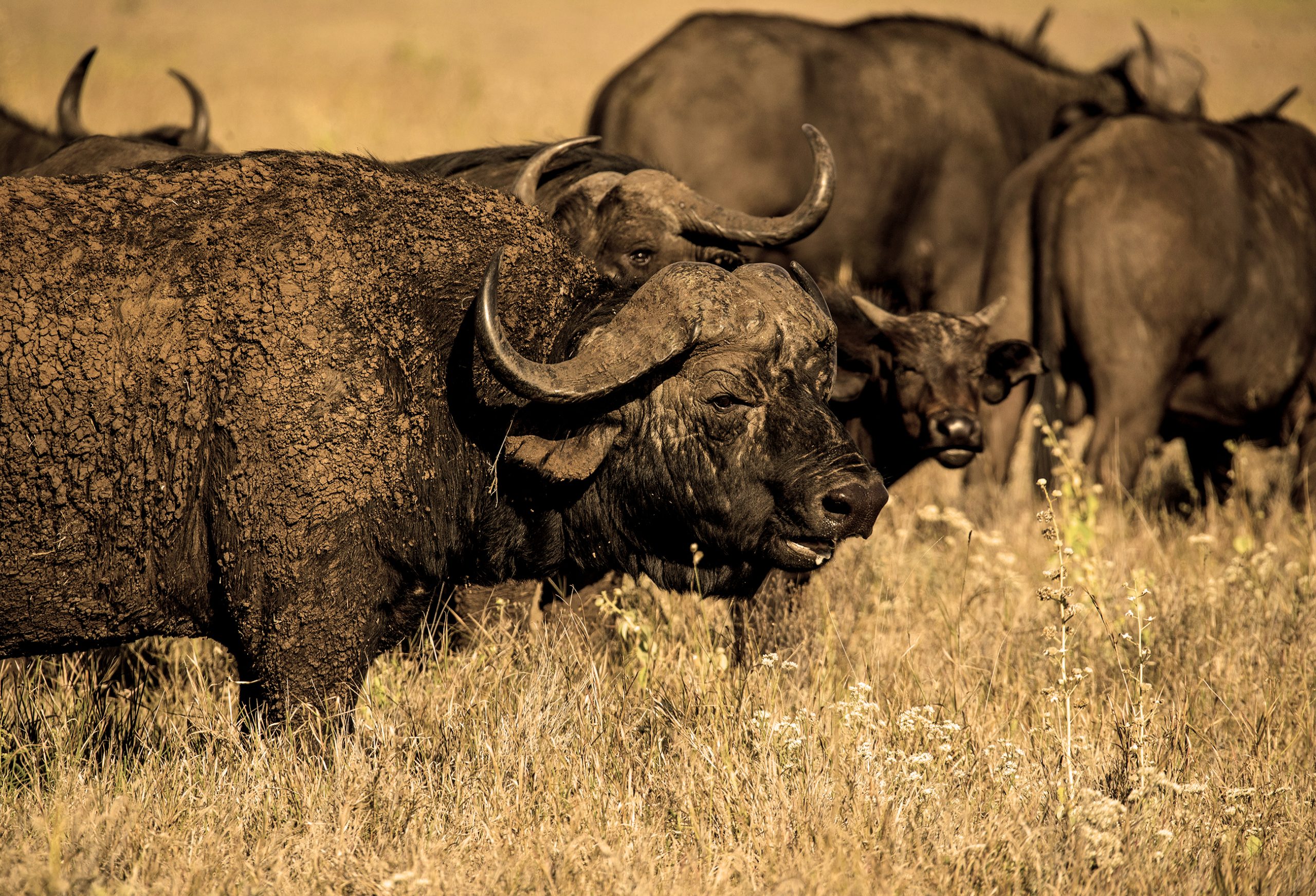
Closely linked to this is habitat conservation. Across Southern Africa, millions of hectares remain wild for one simple reason: wildlife can fund its own protection. Revenue generated through hunting supports essential conservation work such as boundary fencing and maintenance, the removal of invasive plant species, water point management, veld and grassland restoration, and fire control programmes.

In countries like Namibia and Zimbabwe, community conservancies rely heavily on hunting income to remain viable. Where wildlife generates revenue, habitat is protected. Where it does not, land conversion is often permanent. Conservation, after all, is not only about protecting animals – it is about safeguarding entire landscapes.

Anti-poaching infrastructure

Another often overlooked aspect is anti- poaching infrastructure. The reality is straightforward: effective anti-poaching efforts require sustained funding. Regulated hunting contributes directly to ranger salaries, patrol vehicles, fuel, surveillance equipment, intelligence networks, and ongoing wildlife monitoring.

Poaching does not decline simply because awareness increases – it declines when enforcement becomes consistent and effective. Conservation without funding remains a philosophy; conservation with funding becomes a practical reality.

Rural community stability

The role of regulated hunting becomes even more evident in the stability of rural communities. In many areas, wildlife competes directly with people. Elephants destroy crops, lions and hyenas kill livestock, and predators can threaten livelihoods.

If wildlife offers no tangible benefit, it quickly becomes a liability. Regulated hunting helps to shift that balance by providing meat to local communities, creating employment for trackers, skinners, guides, and hospitality staff, and contributing to infrastructure development. Through community conservancies, it can also generate direct revenue.
When communities benefit from wildlife, they are far more likely to protect it. Conservation, in this context, becomes locally driven rather than externally imposed – and that distinction is crucial.

Biodiversity through land use

There is also a broader land-use dimension to consider. Without economic value, wildlife areas are often replaced by cattle ranching, intensive agriculture, mining, or urban expansion.

Sustainable hunting provides an incentive for landowners to maintain natural ecosystems rather than converting them. In South Africa, private game ranches now cover more land than national parks, largely because wildlife-based land use remains economically viable. Biodiversity, quite simply, survives where land remains wild.

Ecological and genetic balance

From an ecological perspective, regulated hunting also plays a role in maintaining balance within animal populations. It does not remove animals randomly, but focuses on older males beyond breeding age, problem animals that threaten communities, and individuals selected through structured population assessments.

When properly managed, this approach mirrors natural mortality patterns and can reduce territorial conflict, overbreeding pressure, and the depletion of limited resources. In this sense, hunting becomes part of responsible ecological stewardship rather than something opposed to it.

The essential word: regulated

All of this hinges on one essential word: regulated. There is a critical distinction between poaching, unregulated killing, and ethical, regulated hunting.

The latter operates under government- issued permits, strict scientific quotas, professional oversight, and detailed monitoring and reporting systems, often alongside international export controls. Remove regulation, and the system quickly collapses. With it in place, hunting becomes a structured and accountable conservation tool.

The bigger picture

Of course, hunting alone does not save wildlife. In many African conservation models, it forms just one pillar alongside ecotourism, scientific wildlife management, private land stewardship, and community partnerships. Remove one pillar, and the system weakens. Remove the value attached to wildlife, and the land itself begins to change.

Final thought

In the end, regulated hunting protects far more than the individual animal harvested. It protects land, habitat, rural livelihoods, anti-poaching efforts, and ecological balance. Perhaps most importantly, it reinforces a principle that is often uncomfortable but undeniably real: in a modern economy, wildlife must hold tangible value if it is to survive.

Conservation is not sustained by sentiment alone. It endures through systems that work – ecologically, economically, and socially. Across much of Africa, regulated hunting remains one of those systems.

Leave a Comment

Scroll to Top