
















Picture a herd of giraffes drifting across the savanna at dusk. To most of us it’s a blur of long necks and brown patches.
To a researcher with a camera, every animal in that herd is wearing a name tag. Each giraffe’s coat pattern is unique, as personal as a human fingerprint, and it stays recognisable for life.
Those patches may help keep a giraffe cool, hide a newborn calf from lions.
The humble spot is one of conservation’s most useful tools.
Look at a herd of giraffes on the savanna and you’ll see a patchwork of browns, tans and creams that seems almost random. Look closer and a pattern emerges. The coat is a signature, a thermal tool, a camouflage and a data point for the scientists trying to protect these animals.
Here’s what those patches actually tell us.
1. Unique patterns across the species
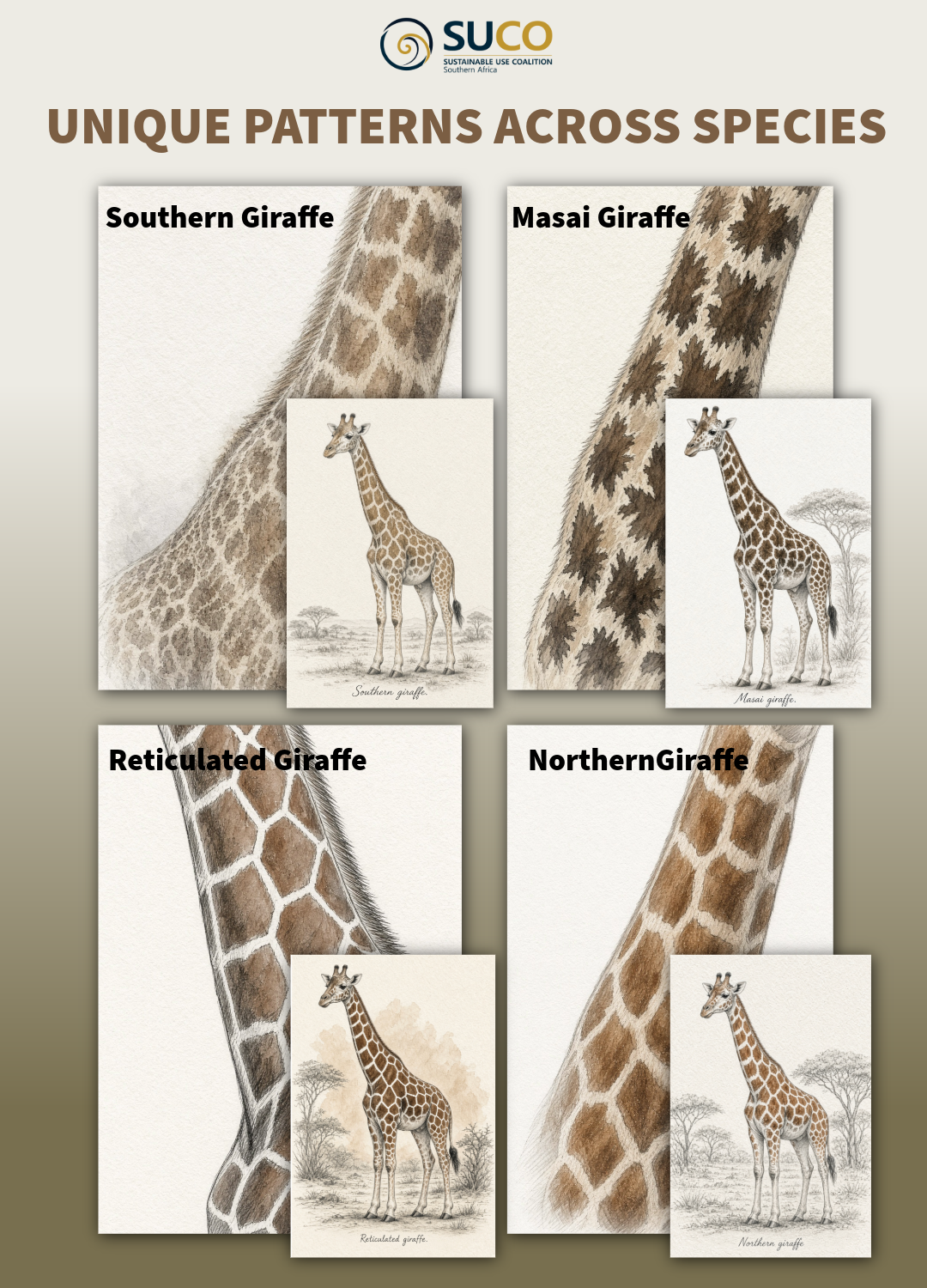
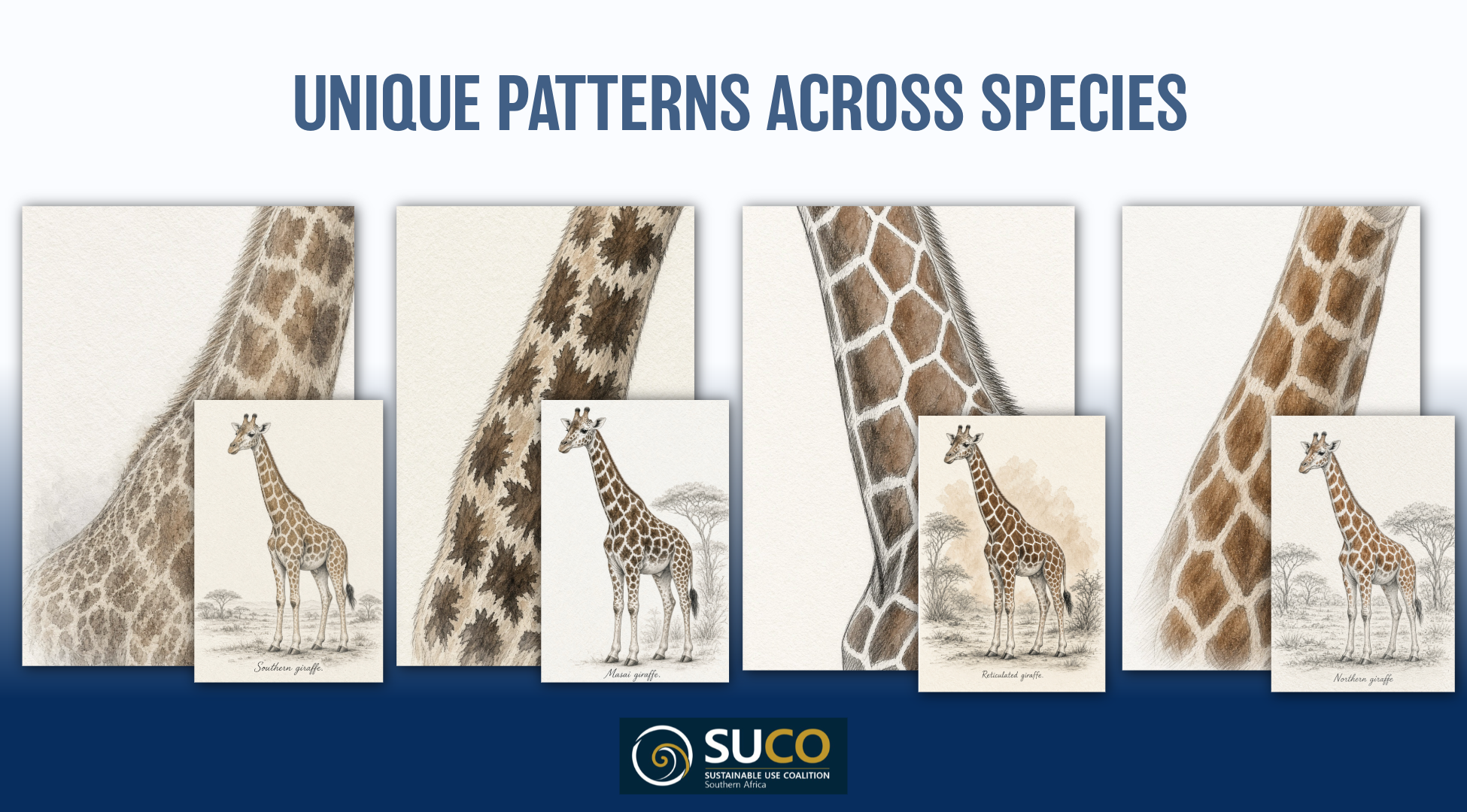
Giraffe coats vary a lot between species, and the differences help biologists tell them apart in the field.
- Southern giraffes tend to have rounder or blotchy patches with uneven edges. The patches usually run down the legs.
- Masai giraffes have jagged, irregular patches often described as vine-leaf shaped, with ragged edges that look almost star-like.
- Reticulated giraffes are the most striking. Large, polygonal, deep chestnut patches are separated by thin, sharply defined white lines, like a net drawn over the animal.
- Northern giraffes vary the most. Nubian giraffes have bold, rectangular chestnut patches with crisp white lines and pale lower legs. West African giraffes are paler, with lighter and sparser markings.
Patterns also differ within a species, and even within a single herd. No two giraffes carry exactly the same pattern, which makes it more like a fingerprint than a uniform. A calf is born with its pattern, and the broad design stays recognisable for life, even as the colours darken or fade with age.