Hunting: Myth or Fact?

Few outdoor activities attract as many opinions, assumptions and heated debates as hunting. Around the campfire, on social media and even among experienced hunters, certain beliefs are repeated so often that they eventually begin to sound like facts.

But how many of them are actually true?

Let us separate hunting fact from fiction.

Myth 1: Hunting always harms wildlife populations

Verdict: Myth

Uncontrolled or illegal hunting can undoubtedly threaten wildlife. However, legal and scientifically managed hunting is very different from indiscriminate killing.

When hunting is supported by accurate population data, responsible quotas, effective monitoring and good governance, it can contribute to wildlife and habitat conservation. Income generated through sustainable wildlife use may give landowners and communities a practical reason to protect natural habitat, maintain healthy game populations and combat poaching.

The important word is sustainable. Hunting is not automatically beneficial simply because it is legal. Poorly planned hunting, excessive quotas and weak enforcement can cause serious damage. Responsible wildlife management requires continuous research, monitoring and adjustment. The IUCN similarly notes that wildlife use can support conservation, but only when it is sustainable, legal and properly managed.

Myth 2: A bigger calibre guarantees a clean kill

Verdict: Myth

A powerful rifle cannot compensate for poor preparation or inaccurate shooting.

Calibre, bullet construction, the size of the animal and the expected shooting distance must all be considered. However, the most important factors remain correct shot placement and the hunter’s ability to use the firearm accurately.

A badly placed shot from a large calibre may wound an animal, while a well-placed shot from an appropriate smaller calibre can result in a quick and humane kill. The heart-and-lung area is generally considered the most effective target zone for large game because it contains vital organs and major blood vessels.

Hunters should practise from realistic field positions—not only from a comfortable bench. Shooting sticks, kneeling positions, uneven ground, excitement and limited time can make a field shot very different from one taken at the range.

The real fact: Confidence should come from preparation and competence, not merely from the size of the cartridge.


Myth 3: Game animals see only in black and white

Verdict: Myth

Many game animals do not see colour in exactly the same way humans do, but that does not mean their world is completely black and white.

Research indicates that deer and several other ungulates have dichromatic vision. This means that their eyes use two main colour channels rather than the three used by humans with typical colour vision. They are particularly sensitive to shorter and middle wavelengths, including areas of the blue and green spectrum.

This explains why some clothing, detergents or equipment containing optical brighteners may appear more noticeable than expected. It also reminds us that camouflage is not simply about wearing a pattern that looks convincing to the human eye.

Movement, contrast, silhouette and position remain extremely important. The finest camouflage cannot hide a hunter who moves carelessly against the skyline.

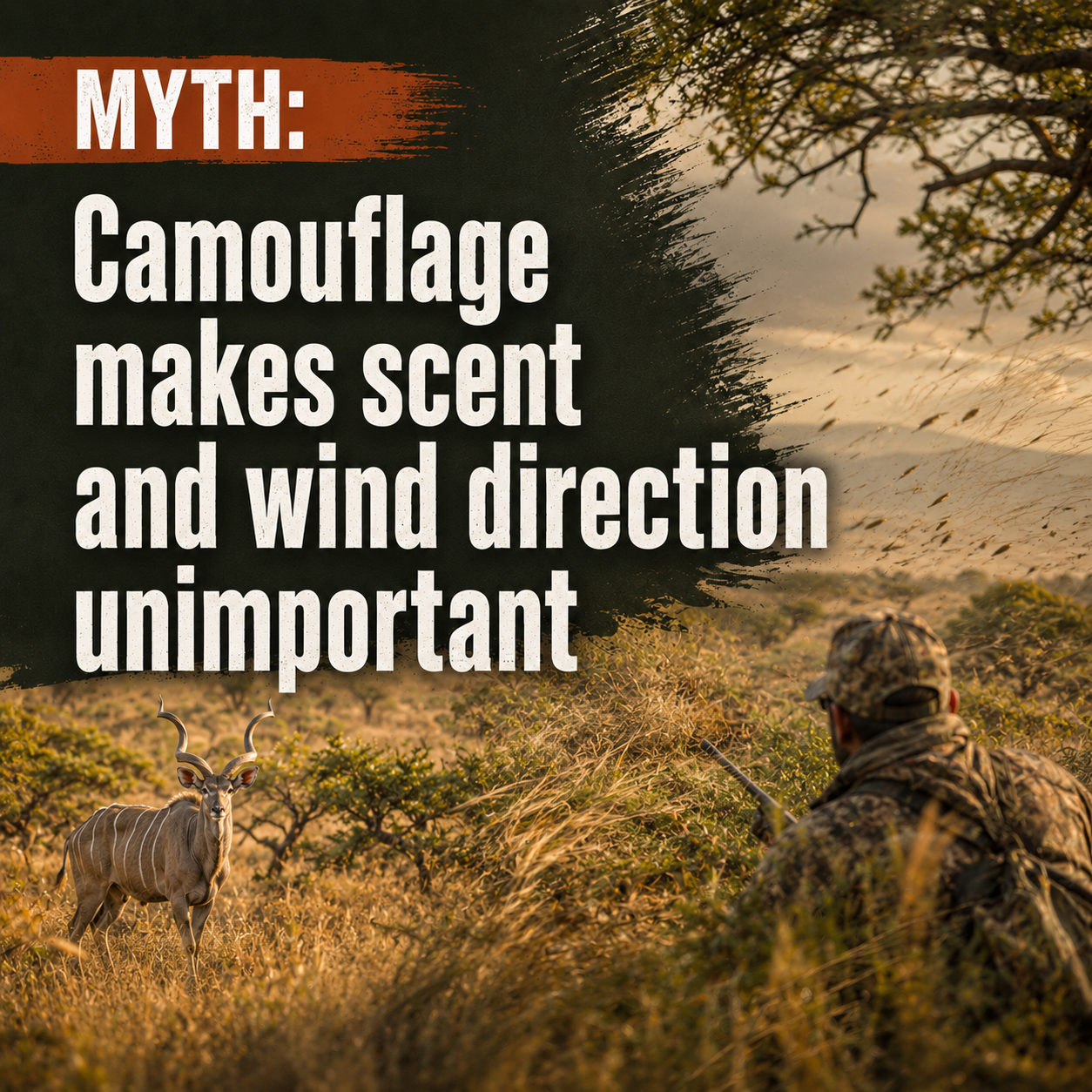
Myth 4: Camouflage makes scent and wind direction unimportant

Verdict: Definitely a myth

Camouflage may help break up the human outline, but it cannot stop scent from travelling downwind.

Many African game species depend heavily on their sense of smell to detect danger. A hunter who approaches with the wind blowing towards the animal may be discovered long before becoming visible.

Wind can also swirl around hills, valleys, riverbeds and thick vegetation. A direction that appears reliable at the vehicle may change completely closer to the animal.

Successful hunters therefore continue checking the wind throughout the stalk. Dust, dry grass, ash or a wind indicator can reveal subtle changes that might otherwise go unnoticed.

The real fact: Camouflage helps, but good fieldcraft helps more.

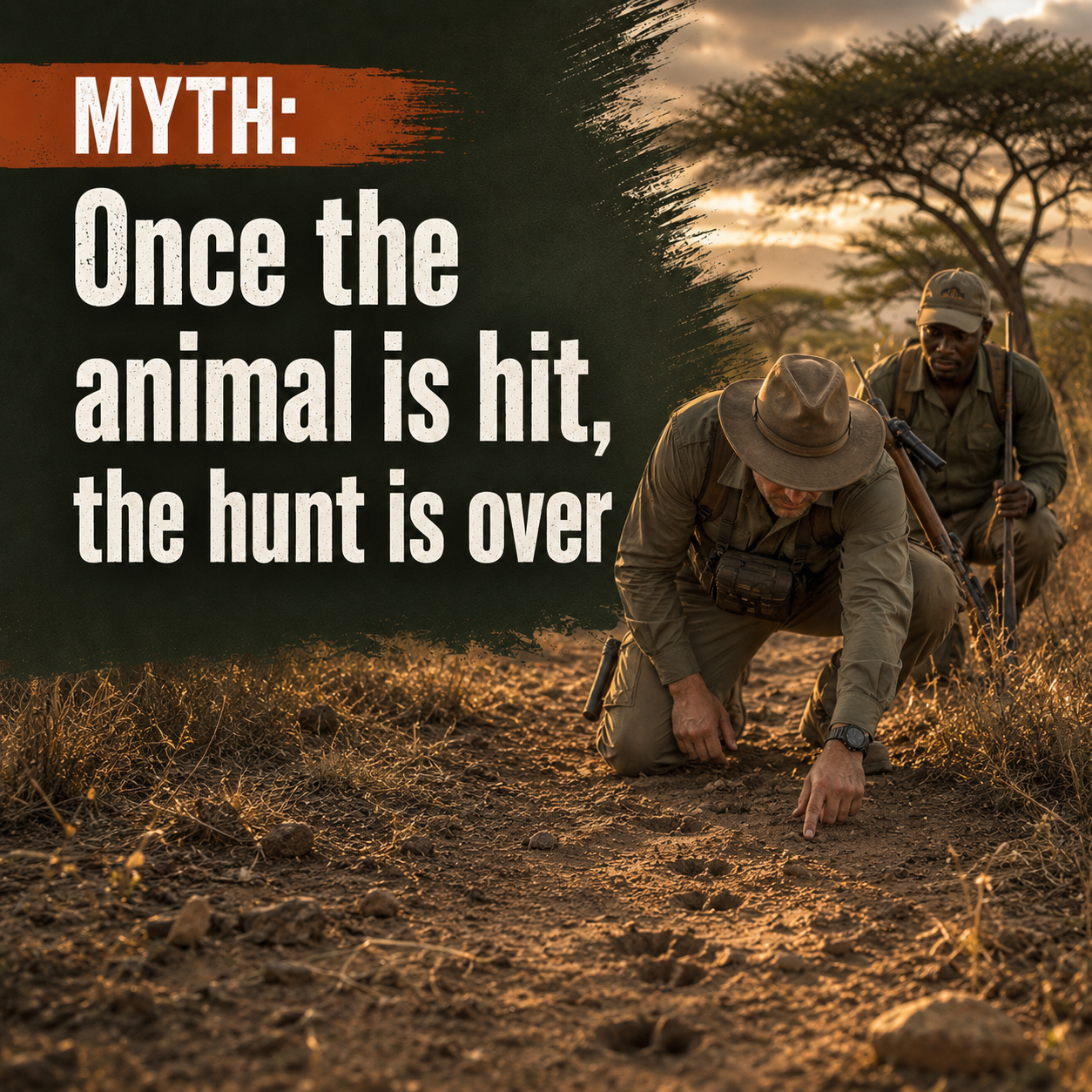
Myth 5: Once the animal is hit, the hunt is over

Verdict: Myth

Pulling the trigger is not the final responsibility of the hunter.

Immediately after the shot, the hunter should watch carefully and remember:

  • Where the shot appeared to strike.
  • How the animal reacted.
  • The direction in which it moved.
  • The last place where it was clearly visible.
  • Any unusual sounds or signs.

Responsible recovery requires patience, observation and careful tracking. Depending on the apparent shot placement, rushing after the animal may push it farther away and make recovery more difficult.

Blood, tracks, disturbed vegetation, hair and broken twigs can all provide valuable information. Hunter-education guidance emphasises that successful recovery depends on correct shot placement, attention to clues, sound decisions about when to begin tracking and a determined effort to find the animal.

An ethical hunter makes every reasonable effort to recover wounded or downed game.

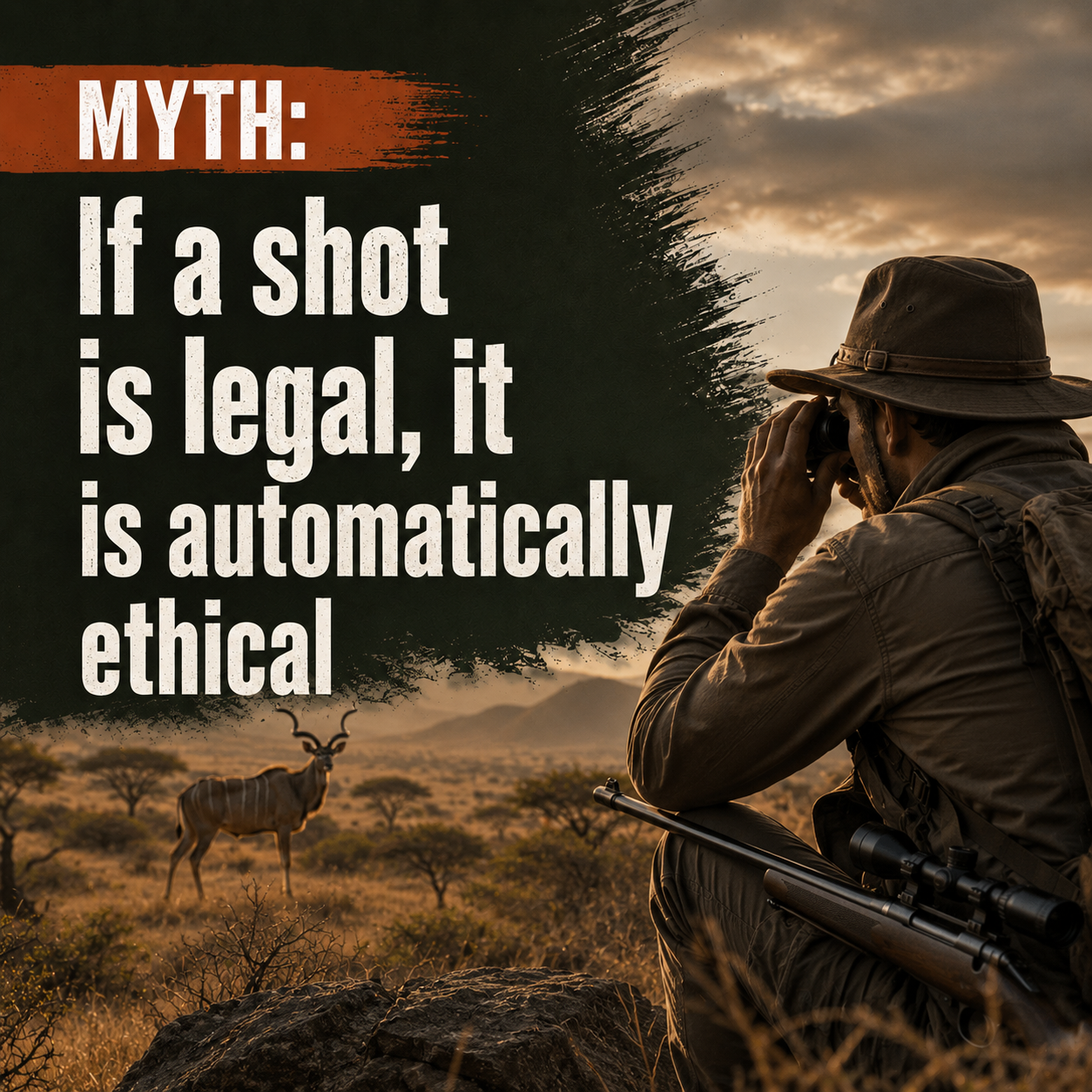
Myth 6: If a shot is legal, it is automatically ethical

Verdict: Myth

The law establishes minimum requirements. Ethics often demand more.

A shot may technically be permitted, but that does not necessarily mean it should be taken. The angle may be poor, the animal may be partially obscured, the distance may exceed the hunter’s ability, or there may be uncertainty about what lies beyond the target.

An ethical hunter is prepared to lower the rifle and allow an animal to walk away.

South African hunting standards recognise this distinction by requiring hunters to comply not only with legal permit conditions, but also with applicable codes of ethical conduct and good practice.

Knowing when not to shoot is one of the clearest signs of an experienced and responsible hunter.

The Final Verdict

Hunting is filled with traditions, stories and lessons passed from one generation to the next. Much of that knowledge is extremely valuable—but even long-standing beliefs should occasionally be questioned.

Responsible hunting is built on facts: accurate information, careful preparation, respect for wildlife, sound judgement and accountability after the shot.

The finest hunter is not necessarily the person with the largest trophy, the most expensive rifle or the longest successful shot. It is the person who understands the responsibility carried into the veld and makes decisions that protect the dignity of the hunt.

Before accepting the next piece of hunting “wisdom” around the campfire, pause and ask:

Is it really a fact—or simply another hunting myth?

Leave a Comment

Scroll to Top