















A successful hunt is never defined by the shot alone. It begins long before the hunter steps into the veld—before the rifle is loaded and before game is sighted. True preparation is built on planning, legal responsibility, respect for nature, and sound ethical decision-making.
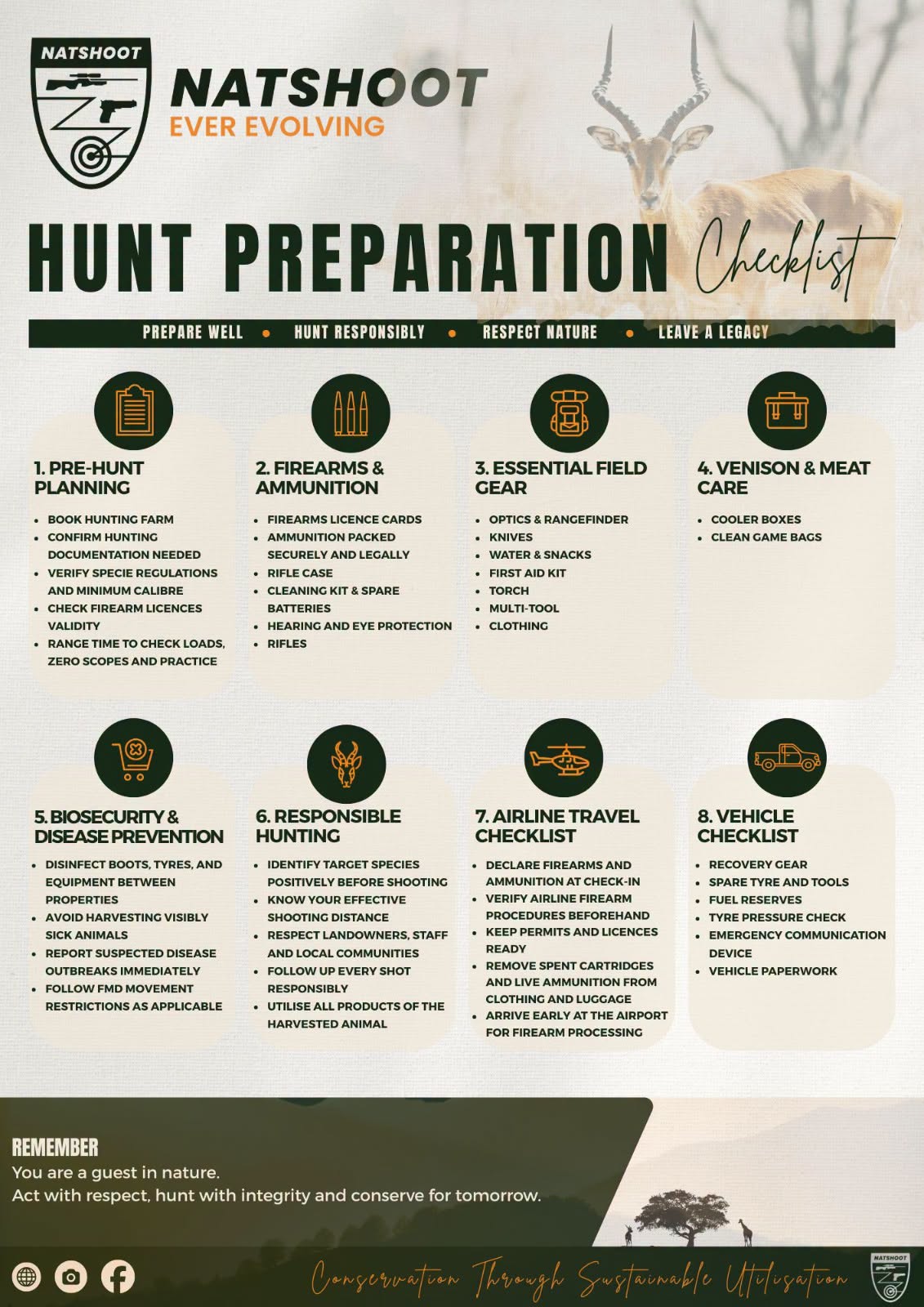
The NATSHOOT Hunt Preparation Checklist serves as a reminder that responsible hunting is not accidental. It is the result of discipline, careful preparation, and a deep respect for the privilege of entering the natural environment.
Plan Before You Hunt
Every hunt should start with thorough pre-hunt planning. Booking the hunting farm is only the beginning. Hunters must ensure all required documentation is in order, verify species regulations, and confirm that the chosen calibre meets both legal standards and ethical requirements for the intended game.
Equally critical is firearm readiness. Licences must be valid, and hunters should spend sufficient time on the range. Checking loads, confirming zero, and practising regularly are essential. A hunter who lacks confidence in their equipment or ability should not take the shot.
Preparation is not simply about convenience—it prevents wounded animals, unsafe situations, and avoidable mistakes.
Firearms, Ammunition and Field Readiness
Firearms and ammunition must always be transported securely and in accordance with the law. Before departure, hunters should check licence cards, rifle cases, ammunition, cleaning kits, hearing and eye protection, and spare batteries.
Equipment failure in the field can lead to poor decisions. Something as small as a flat battery or forgotten cleaning gear can influence the outcome of a hunt.
Field gear is just as important. Essential items include:
- Optics and rangefinders
- Knives and multi-tools
- Water and snacks
- First aid kit
- Torch
- Appropriate clothing
The veld is unpredictable—hunters must be prepared for changing weather, long distances, and unexpected delays.
Respect the Animal After the Shot
The responsibility of a hunter does not end with the harvest. Venison and meat care are integral to ethical hunting. Cooler boxes and clean game bags should always be prepared in advance.
Proper handling of meat ensures quality, reduces waste, and honours the animal taken. Hunting is not just about taking from nature—it is about responsible utilisation, gratitude, and respect.
Biosecurity Matters
Modern hunters also carry the responsibility of protecting farms, wildlife, and ecosystems from disease.
Simple measures make a difference:
- Disinfect boots, tyres, and equipment between properties
- Avoid harvesting visibly sick animals
- Report suspected disease outbreaks immediately
- Comply fully with movement restrictions
Biosecurity is not only a farm management concern—it is a conservation responsibility shared by every hunter.
Ethical Hunting in Practice
Responsible hunting means:
- Positively identifying the target species
- Knowing your effective shooting range
- Following up every shot diligently
It also involves respect—for landowners, farm staff, fellow hunters, and surrounding communities.
Ethical hunters exercise restraint. They understand when to shoot—and when not to. Patience, discipline, and respect are just as important as marksmanship.
Every shot fired must be safe, legal, and humane.
Travelling with Firearms
For hunters travelling by air, preparation is critical. Firearms and ammunition must be declared at check-in, and airline procedures should be confirmed in advance.
Hunters should:
- Keep permits and licences accessible
- Remove spent cartridges and live ammunition from clothing and luggage
- Arrive early to allow time for firearm processing
Poor planning at this stage can quickly turn a well-organised hunt into a stressful experience.
Vehicle Preparation
Hunting trips often involve long distances, rough terrain, and remote areas. A vehicle checklist is essential for safety and self-reliance.
Key considerations include:
- Spare tyres and recovery gear
- Tools and fuel reserves
- Tyre pressure checks
- Emergency communication equipment
- Vehicle documentation
A well-prepared vehicle is a critical part of a responsible hunt.
A Guest in Nature
Perhaps the most important reminder is this: hunters are guests in nature.
To hunt is to enter a space that demands humility, integrity, and respect. Every hunter leaves an impression—on the landowner, on fellow hunters, on local communities, and on the future of hunting itself.
Prepare thoroughly. Hunt responsibly. Respect nature. Leave a legacy.
Because responsible hunting is not only about what we take—it is about what we protect for tomorrow.