The Big Reds of the Eastern Cape - Laurence Jennings
The ram saw us before we saw him and started jogging away in that typical Lechwe manner, with his head down and nose close to the ground. All I could see was how wide his horns were, with the hooks at the end. I laid down and moved behind the 6.5 PRC. We hoped the bull would stop on the horizon for a last look back, but as he reached the crest, he didn’t and dropped down into the next valley.
Ever since I saw lechwe on the slopes of the Stormberg Mountains in the Eastern Cape, I wanted to hunt one there. At the beginning of 2024, the stars aligned for me, and during a fallow deer rut, the opportunity presented itself. The property near Molteno had several hundred lechwe, but that didn’t make it easy. The big, old, mature rams don’t become old and big by being stupid. Hiding in these beautiful mountains and valleys is a skill they have perfected. I remember seeing a group of female lechwe with a large ram in the herd while hunting fallow deer a few years ago. The group spotted us, but they weren’t too bothered by our presence, although the ram slipped away through a shallow trench and some low shrubs, leaving the females behind.
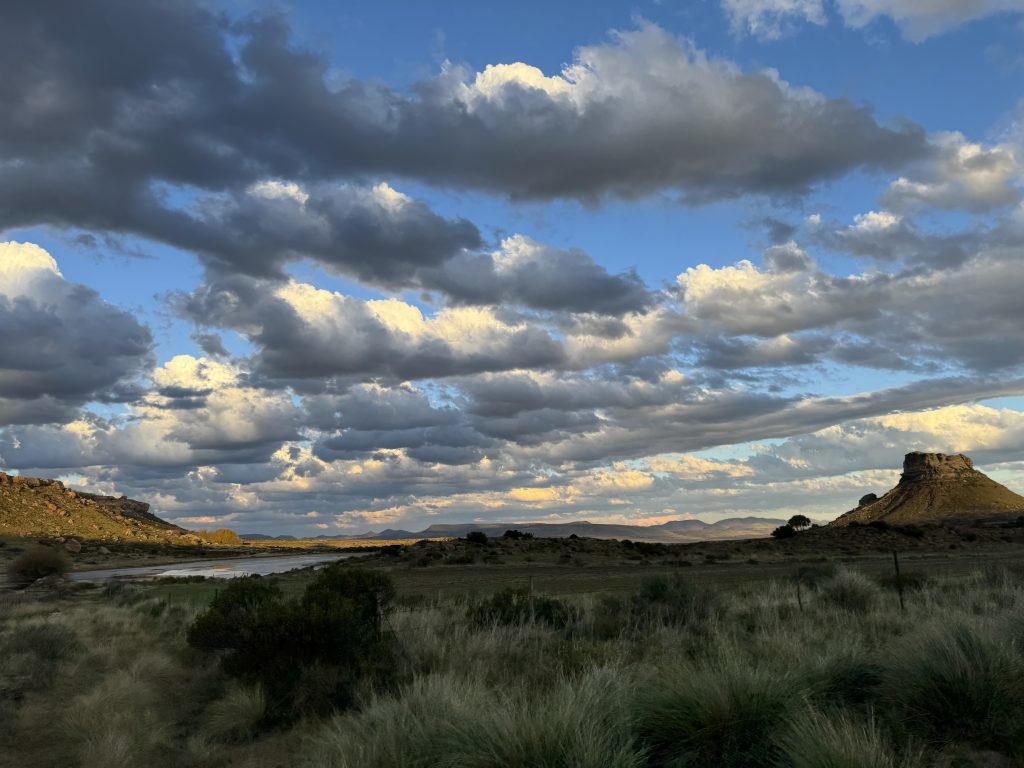
On the first morning of the hunt, the plan was to hunt fallow deer stags. If we spotted lechwe, we would check for a big ram and adjust the plan. By late morning, we hadn’t seen a lot of lechwe, and Armand said he wanted to go into the next valley. There was a large plain with some green grass, and he thought there might be more movement there. There is only one road that leads into the valley, and at some point, right before you start dropping down, you can see the plain. As we reached this point, Armand stopped, and after a quick scan, we could see his gut feeling was correct. About 120 lechwe were standing in the plain, feeding. They were still far away, but we could make out some rams in the big herd. We slowly maneuvered into position, but at the last moment, some of the females saw us, and the herd started moving into the thick brush next to the open field. They wanted to use the kloof at the back end of the plain to escape and go to the next valley.
There were three nice rams in the herd, and one caught my attention, so much so that I got into position for a shot before Armand told me to. After studying the ram for several minutes as he walked out of the valley, Armand turned to me and said, “I think we can do better; his hooks aren’t quite there yet, and the S shape of his curves is not what I want.” This is something I really respect about Armand – he never lets you shoot just an animal for the sake of shooting one. He always pushes himself and you to get the best possible trophy. After the last few females disappeared over the top and into the valley beyond, we took a few minutes to have some sandwiches and a cold drink. Armand said he knew of two big rams, almost proper old bachelors that had been kicked out of the herds he saw on a previous hunt, but that got away from him. He said to me with a slight grin, “I think one of them might be the one we are looking for.”
Lechwe are medium-sized animals, but they are larger than they appear. They are members of the waterbuck and Kobfamily, and their family traits are quite visible when you look for them. With a shoulder height of about 100 cm and weighing between 70 kg and 120 kg, the lechwe is a truly medium-sized antelope. They have beautiful coloration, with coats ranging from reddish-brown on the upper parts and flanks to brilliant white on their undersides and inner legs. The front of the forelegs and the hocks are black, and they have white patches around the eyes. Only the rams carry lyrate-shaped horns.
The hooves are notably elongated, which is an adaptation to their wet and soggy substrate of their preferred habitat, but these animals are very adaptable, and finding them in drier regions across southern Africa is not uncommon. Their hind legs are slightly longer in proportion than those of other antelopes, making it easier for them to run long distances in marshy soil. As a result, their hindquarters are noticeably higher than the forequarters, giving them a strange appearance.
Three subspecies of lechwe occur in southern Africa today, but four subspecies have been recognized, with one being extinct.
- The red lechwe (Kobus leche leche) occurs in western Zambia, northern Botswana and the eastern Caprivi in Namibia.
- The Kafue lechwe ( Kobus leche kafuensis) is found on the floodplains of the Kafue in Zambia
- The black Lechwe (Kobus leche smithemani) occurs in the Bangwelu swamps in north-eastern Zambia.
- Roberts’ lechwe (Kobus leche robertsi) (Rothschild, 1907) – Formerly found in northeastern Zambia, now extinct. Also called the Kawambwa lechwe.
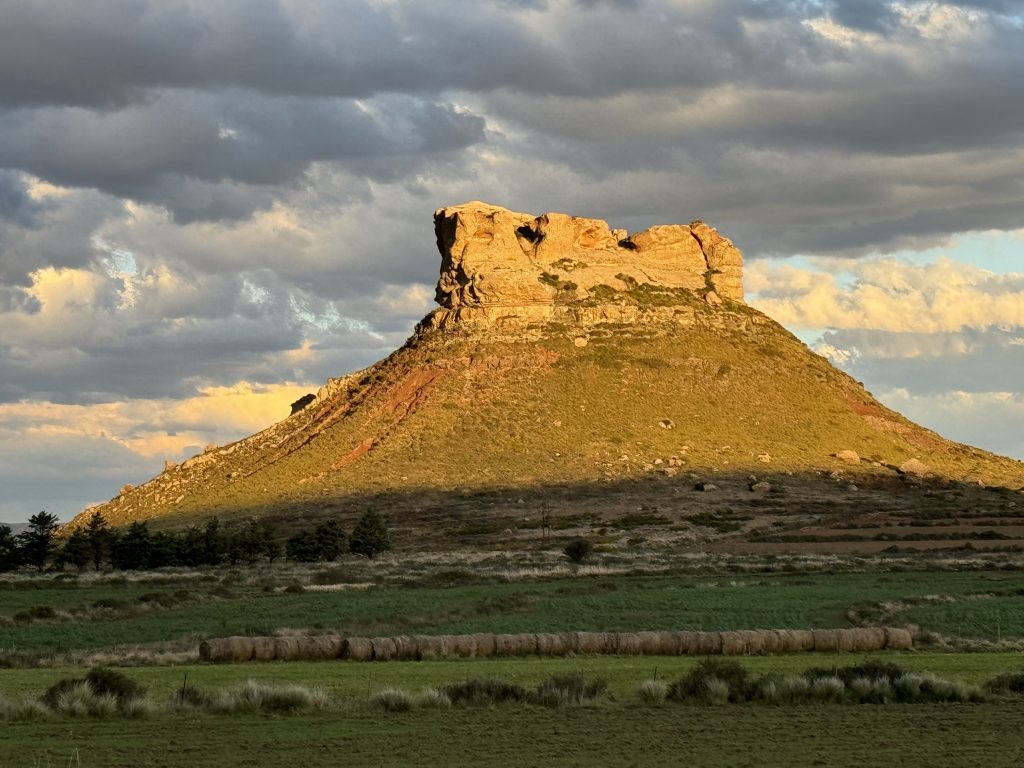
After our break and quick lunch, we headed toward the old rams. The area they frequented wasn’t as mountainous as I expected. It was a bit flatter on top, with several rolling hills and large ditches running down the sides. What made it tricky was the rolling hills. You might see an animal, and if it disappeared behind the next hill, it could easily vanish without you knowing which way it went. That’s what happened last time, Armand said. You would see an animal, and as soon as it disappeared behind the next hill, you would lose sight of it.
As we reached the top, we spotted one ram on our left about 300 m away. He was large, with hooks curving forward and thick horns. We watched him as he started to walk away, but something just didn’t feel right. At that moment, a big ram began running on our left. All I saw were wide horns, and I immediately moved into position behind the 6.5 PRC. Armand turned to me and said, “That’s the ram we lost last time. He is smart and cunning; make sure of the shot!”
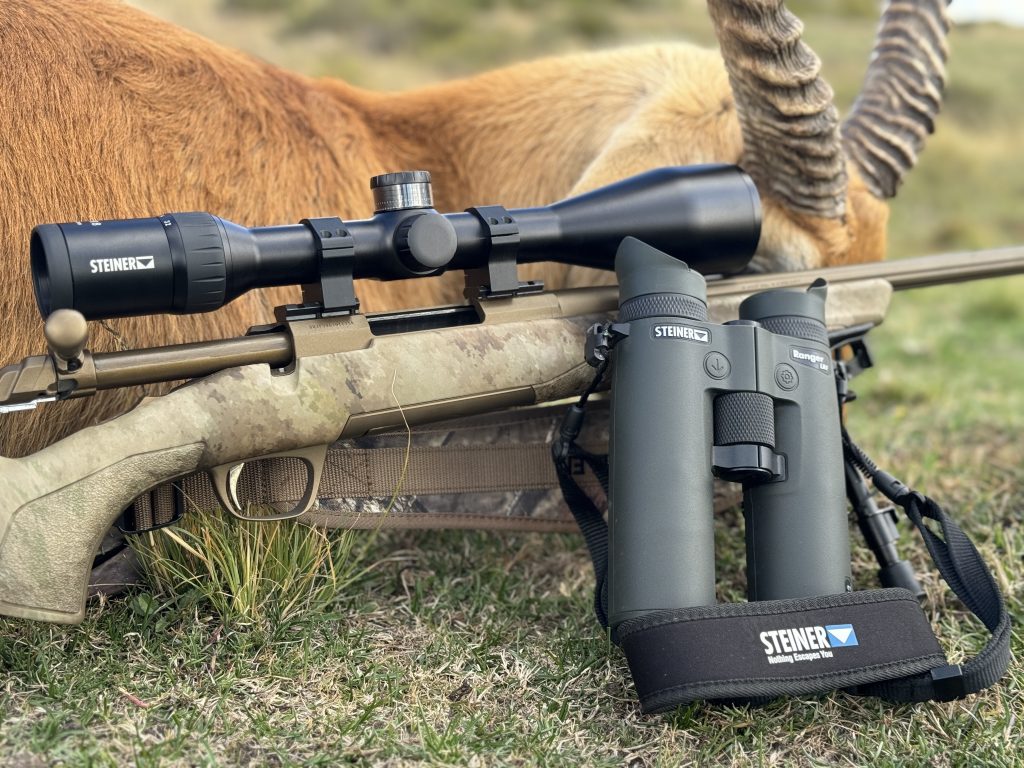
For this hunt, my hardware was my new Browning Hells Canyon chambered in 6.5 PRC. I was shooting Hornady ELD-X 143-gr factory ammunition at 2960 fps. The rifle is equipped with a Steiner Ranger 8 scope, with 4-32×56 magnification, and topped off with an A-tec H2 silencer.
The ram was half walking, half jogging in that typical lechwe fashion with his head down and nose close to the ground, trying to sneak away from us unnoticed. All I could see was how wide his horns were, with hooks at the end. I knew in that first second that I wanted this ram. All he needed to do was stand for a second and give me a chance, but he wasn’t slowing down at all. All I could do was hope he would stop on the horizon and look back at us for a last glance, but as he reached the top, he disappeared over the edge.
I looked over at Armand, and he smiled. “I think I know what he is going to do; there is a natural funnel in the next valley. It passes over some water and a large cluster of rocks. If we can reach the rocks before him, we will have a perfect shot.” Hurrying, we made a wide circle to get in front of the ram. It took us about thirty minutes, but after a quick walk and some jogging, we were in position at the cluster of rocks. I got set up and tried to steady my breathing again. A few minutes passed, and no ram yet. Ten minutes went by, and still no ram. Did we miss our chance? Did the ram get away again? All kinds of questions ran through my mind as we sat there.
Just as I began to think he must have passed that spot before we arrived, Armand said, “There he comes.” About 300 m away, on the opposite side, we saw him coming over the hill. He probably stayed behind it to make sure the danger had passed before he moved on. Very wary and smart old ram, I thought in that instant. He was unaware of our presence and started walking at a brisk pace, at a slight angle toward us.
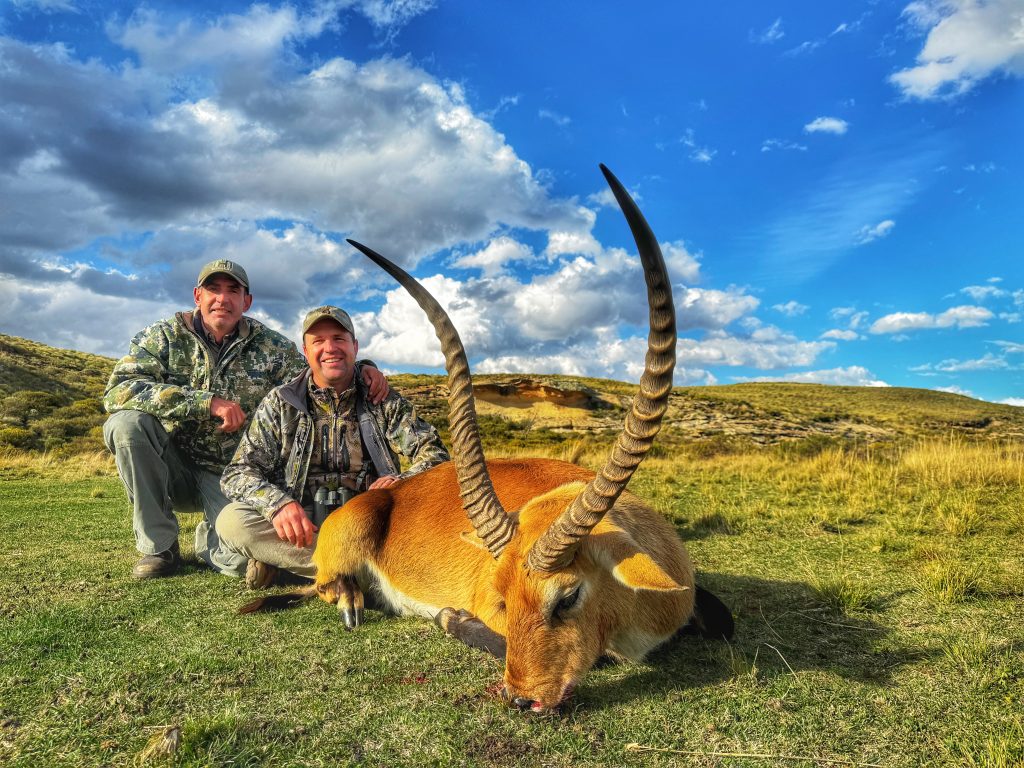
At 175 m the ram stopped as he must have sensed something, and he looked in our direction. It was as if he knew something was or someone was watching him. The crosshairs of the Steiner Ranger found the point of the shoulder, and I let out my breath while taking in the last bit of slack on the trigger. When I fired, the Hornady 143-gr ELDX found the spot on the ram’s shoulder, and he jumped straight into the air. He immediately ran flat out to our right and dropped right in front of us below the rocks we were on.
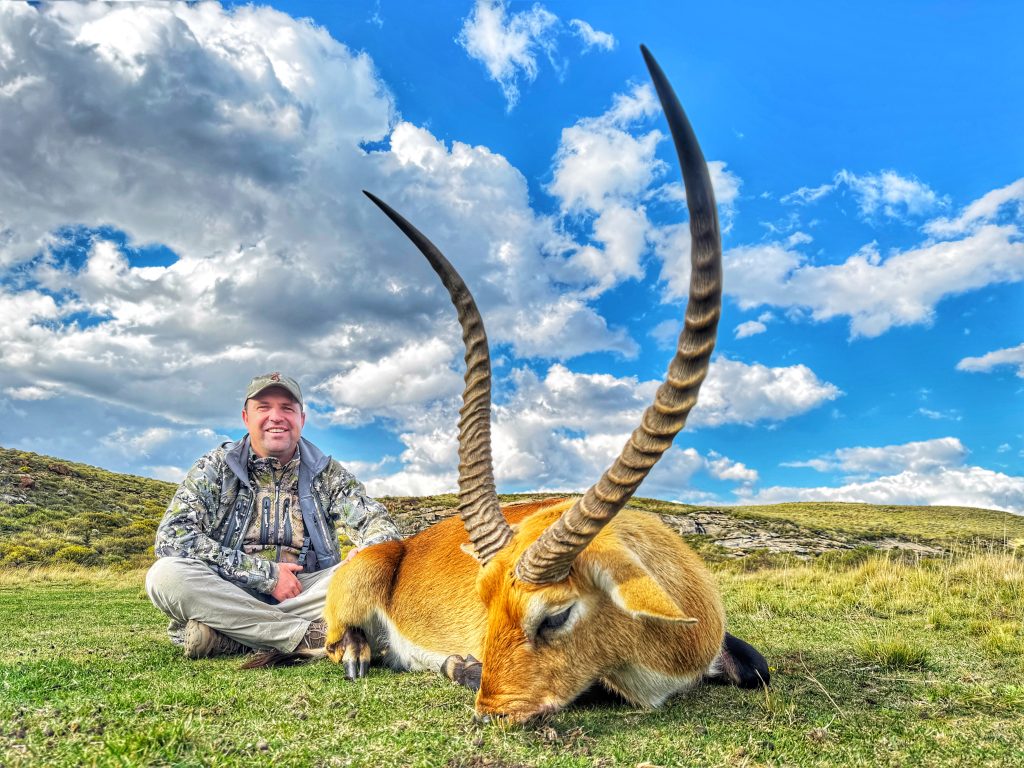
As I approached my ram, the beauty of the animal and the surrounding landscape made me pause to enjoy this wonderful experience. Hunting one of these special old red lechwe rams in the Eastern Cape will remain with me forever.